The Richness of Land and Cultures
Agriculture, employing approximately 55% of the workforce, remains the country's primary economic activity. In Guatemala, it presents a dual character: coffee, banana, cocoa, sugarcane,
Agriculture, employing approximately 55% of the workforce, remains the country's primary economic activity. In Guatemala, it presents a dual character: coffee, banana, cocoa, sugarcane, palm oil (which has replaced former cotton plantations) produced on large estates along the Pacific coast (fincas), are destined for export. Guatemala ranks as the 6th largest coffee producer in the world. These vast estates contrast sharply with small family holdings dedicated to subsistence crops with modest yields (maize, beans, rice, wheat) and livestock raising.
Forestry is an important sector of the economy: Guatemala's forests produce cabinet woods, balsam, chicle (used in chewing gum manufacture) and oils, destined for export but also consumed locally. Fine tropical fruits abound (pineapple, bananas, melon, mangoes, papayas and others). The land is rich and the soil exceptionally fertile, though the country also harbors oil deposits and small reserves of uranium and mercury.
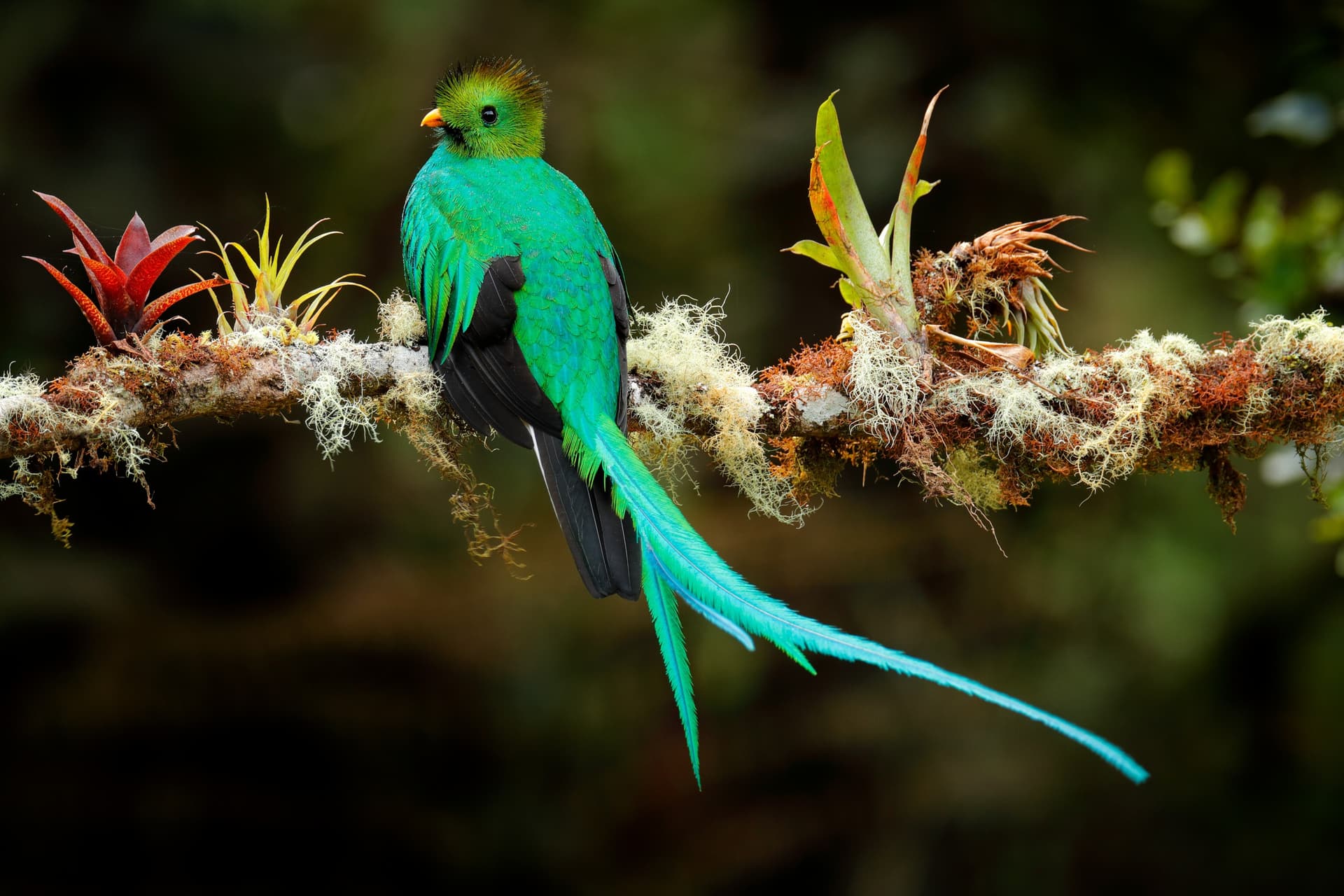
The same richness extends to biodiversity, as the country boasts abundant and highly diverse wildlife and flora. For example, the quetzal, with its resplendent plumage, is the national bird symbolizing Guatemala.