Laguna del Tigre National Park
Laguna del Tigre National Park
In the heart of Petén, Laguna del Tigre National Park combines dense jungle, rare wildlife and the Maya site of Waka El Perú. An adventure off the beaten path.
Nestled in the heart of Petén's thick forest, in the north of the country, Laguna del Tigre National Park shelters some of Guatemala's greatest treasures. Crossing the Rio San Pedro river, exploring the jungle, observing its animals and discovering the ancient Maya city of El Perú truly give the impression of being an explorer.
Within this lush verdure, howler monkeys, jaguars, parrots, jabirus, quetzals and crocodiles fascinate as much as the archaeological sites. Living this experience during a trip to Guatemala reconnects you with the environment and revives an adventurous spirit in the hearts of nature lovers.
History
Near five centuries before our era, the city of Waka' was built at the very location of the current Laguna del Tigre National Park. Located near the Rio San Pedro river, it was an important trading center in northern Guatemala. Its inhabitants traded maize, beans, chili peppers, avocados, rubber, jade and quetzal feathers with the great city of Tikal, the powerful city of Calakmul, and even with the Aztecs of Teotihuacan.
At its peak, the city was home to tens of thousands of citizens. They built an impressive pyramid in the center of the city where they paid homage to the god Quetzalcóatl, a great feathered serpent. They established other places of worship, residential areas, and even a ball court where they played the traditional ball game.
During the 7th century, the lord of Waka' formed an alliance with the city of Calakmul and betrayed the king of Tikal. But the latter was not yet finished. Tikal reasserted its military power and crushed Calakmul during a bloody war. It was then Waka's turn.
During the 8th century, the lord of Waka' was captured, beheaded and offered as a sacrifice. His domain was completely devastated by his adversaries. Only ruins remained.
The forgotten city was rediscovered during the 1960s. It quickly sparked the interest of archaeologists from around the world.
In 1990, the environmental and cultural richness of the site and its surroundings prompted authorities to establish Laguna del Tigre National Park. The Las Guacamayas Biological Station, a center dedicated to the protection and research of local fauna and flora, was established in 1997.
Visiting Laguna del Tigre National Park
Laguna del Tigre National Park is located in northern Guatemala, 240 kilometers from the city of Flores. This protected area is notably renowned for its thick forest, lagoons, archaeological site, animals and the indigenous communities that live in the region. Exploration of this 289,912-hectare area begins with a visit to the small village of Pasa Caballos.
Pasa Caballos
Pasa Caballos is four hours by road from Flores. This small hamlet of 1,500 inhabitants is the main entry point to Laguna del Tigre National Park. You'll discover a few dwellings of brick or wood in the heart of thick vegetation. In some places, you feel as though you're in a large ranch. Cowboys in straw hats ride along the roads.
The village inhabitants are descendants of the Q'eqchí Maya people. You hear stories of legends about their ancestors, their deportation through history or the ravages of oil exploitation. They speak in a language that blends some Spanish words with their own dialect. From there, with a good guide, you can reach the park aboard a lancha or by trekking through the forest toward the Las Guacamayas Biological Station.
The Estación Biológica Las Guacamayas
This environmental research center is located 30 minutes by boat from Pasa Caballos village and two hours' walk from the hamlet. Within its beautiful buildings, it offers overnight accommodation with views of a magnificent garden and the forest. Several trails depart from here, leading deep into the jungle.
The Rio San Pedro Viewpoint trail leads to a beautiful overlook with a truly impressive view of the park. This viewpoint is approximately one kilometer from Las Guacamayas station.
Another path leads to the Guardianio Sitio El Perú. This monitoring station is 25 minutes' walk from the research center. From this location, it takes approximately two hours of hiking through dense jungle to reach the Waka El Perú archaeological site. Along the way, a fork in the path allows you to venture deeper into the forest and reach the park's lagoons.
Waka-El Perú
Discovering El Perú, or the ancient city of Waka', is a truly unique experience. Its gigantic stelae, strange tables, platforms and great pyramid are fascinating. Your guide will tell you its history, the meaning of the faces sculpted on its stones and the general organization of the archaeological site.
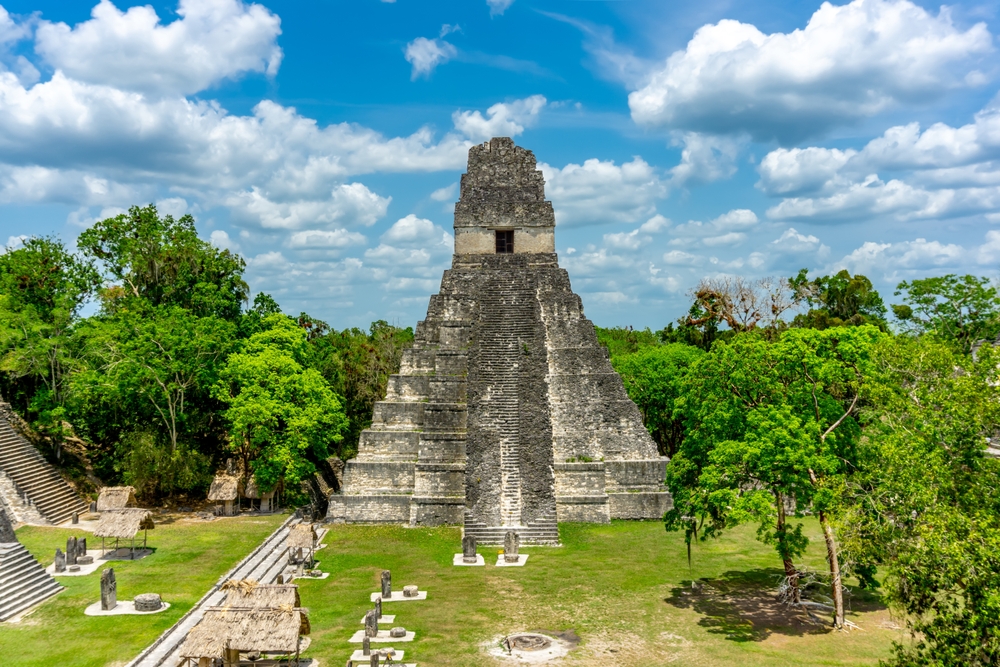
On Plaza 1, in the center of the site, stands an imposing stepped pyramid 18 meters high. An ancient place of worship for the serpent-god Quetzalcóatl, it also contains several tombs that are still the subject of archaeological excavations. You can learn more about the history, legends, culture and religion of the ancient city by observing other remains scattered throughout the area.
A Journey on the Rio San Pedro River
Traveling aboard a lancha is quite unsettling at first, especially with the pitching of the small boat. But you soon get used to it. You then appreciate the beauty of the forest, the migratory birds perched on trees such as scarlet macaws, quetzals or jabirus. The vibrant colors of their plumage are magnificent. In some places, you can spot a few crocodiles, impassive, watching the boat.
Hiking Through the Forest
A forest walk reveals the animal species that live within the park. The air is pure, laden with humidity, with a scent of moss and exotic plants. The impressive jungle vegetation is truly incredible. Perched in trees, howler monkeys generally keep their distance. But you can hear their calls from afar. You can also observe jabirus, parrots or tapirs. Night explorations allow you to spot pumas, jaguars and even a few ocelots roaming here and there at a distance. Near the lagoons, you might encounter some river turtles and admire a few crocodiles from afar.
The park is home to nearly 130 animal species including all sorts of mammals, birds, amphibians and fish.
Don't forget its savannas, plains and marshes. Nearly fourteen ecosystems coexist within the reserve. They are unfortunately threatened by forest fires, poaching, illegal fishing and oil exploitation.
Climate
Laguna del Tigre National Park enjoys a hot and humid climate. Heavy rains fall on the region between July and December. Clearer weather illuminates the forest from January to June. The average temperature is 30°C. In addition to the heat, a certain humidity constantly prevails in the jungle.
Hours and Admission
Parque Nacional Laguna del Tigre is open daily from 7 a.m. to 7 p.m. The reserve is managed by Las Guacamayas Biological Station. Their rates depend on the length of your stay and the services you require, including transportation, accommodation, meals, activities and guide services.
Want to discover this destination?
Our local advisors design your tailor-made trip.